
If you’ve ever shared a viral pet video only to wonder later whether it was actually good for the animal, you’re not alone — and you’re not foolish. Falling for pet health misinformation doesn’t mean you’re gullible. It means you care deeply about your pet in a digital environment specifically engineered to bypass careful thinking.
Understanding pet misinformation psychology — why it works, and on whom — is the first step toward protecting your pet from it.
You’re Not Foolish. You’re a Caring Pet Parent in a Manipulative Environment
Protecting pets from myths requires first recognizing that the problem isn’t a lack of intelligence. Research consistently shows that the people most vulnerable to health misinformation are also among the most emotionally invested in the outcome. For pet parents, that emotional investment runs deep.
A 2020 peer-reviewed study published in Cognitive Research: Principles and Implications (Martel, Pennycook & Rand) found both correlational and causal evidence that reliance on emotion significantly increases belief in fake news. Inducing emotional reasoning led participants to believe false content at higher rates than those who reasoned analytically. When we love an animal and want to do everything right for them, that emotional investment can override the analytical thinking that would otherwise catch a red flag.
How Misinformation Exploits Pet Parenting Instincts
The same protective instincts that make someone a great pet parent can work against them online. Algorithms reward content that triggers strong emotional responses — delight, fear, protectiveness, outrage — regardless of whether that content is accurate or safe. A video claiming that traditional veterinary vaccines harm pets elicits strong reactions. The platform’s job is simply to keep you watching and engaging.
This creates a specific vulnerability for devoted pet parents. Content that frames itself as insider knowledge — “what vets don’t want you to know,” “the natural approach traditional medicine ignores” — activates something real: the desire to advocate fiercely for someone who can’t speak for themselves. That impulse is genuinely admirable. The problem is that it can be targeted by anyone with a camera and a compelling caption.
Content spreads not because it’s accurate but because it triggers an emotional response. The pet parenting instincts that make you attentive, thorough, and devoted also make you more likely to click, share, and act on content that feels urgent or revelatory.
The Cuteness Bias: When “Aww” Overrides Analysis
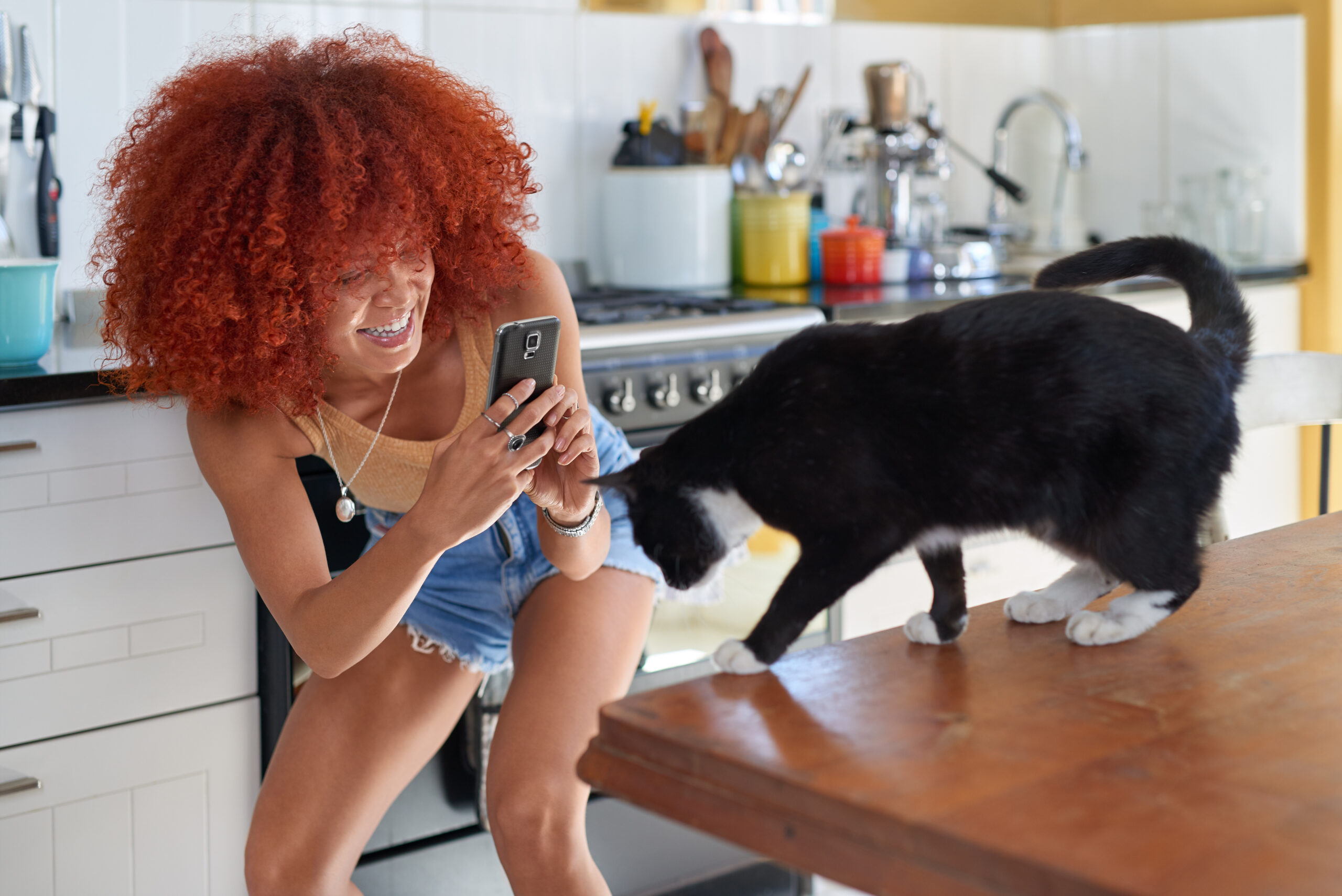
It’s a great feeling to catch those perfect Olympic moments, but resist the urge to encourage your pet to do more than they would naturally.
Perhaps the most powerful cognitive bias affecting pet parents online is what researchers call the cuteness bias — the automatic positive emotional response humans have to baby-like features: large eyes, round faces, small proportions. Most pets trigger this response naturally, which means content featuring animals arrives pre-loaded with emotional warmth before a single frame plays.
In practice, this means a dog with wide, startled eyes and a frozen posture is perceived as “adorable” before the analytical part of the brain recognizes it as a fear response. A cat scrambling away from a cucumber registers as hilarious before it registers as distress. The emotional response happens first and fast — and it shapes everything that follows.
This isn’t a flaw in pet parents. It’s a predictable feature of human cognition that content creators, whether intentionally or not, routinely exploit. Recognizing the cuteness bias is the beginning of overcoming it.
Social Proof and Engagement Metrics: Popularity Isn’t the Same as Safety
One of the most reliable drivers of pet health myth belief is social proof — the tendency to interpret widespread acceptance as evidence of validity. When a video accumulates millions of views, thousands of enthusiastic comments, and a verified creator’s endorsement, the brain processes that popularity as a form of expert consensus. It isn’t.
Pet video engagement metrics measure emotional resonance, not veterinary accuracy. A video can receive 10 million views and still depict something harmful. Instagram algorithm manipulation means content that triggers strong emotional responses gets amplified, regardless of safety. Virality and safety are unrelated.
A well-documented example of this dynamic: a 2023 study published in the journal Vaccine (Motta et al., Boston University School of Public Health) surveyed 2,200 dog owners and found that more than half expressed canine vaccine hesitancy. The research documented a clear COVID vaccine “spillover effect” — dog owners who distrust human vaccines are significantly more likely to distrust and skip pet vaccines as well. This is misinformation spillover with real consequences: outbreaks of preventable diseases, pets put at risk by skepticism that was never grounded in veterinary evidence.
How Manipulation Tactics Hide in Plain Sight
Even when pet parents are actively trying to evaluate content critically, specific manipulation tactics in viral pet videos are designed to prevent that evaluation from happening clearly.
Fast editing cuts remove the context that would reveal an animal’s stress response before or after a clip. Upbeat, cheerful music creates positive emotional associations that override analytical attention — the pet content emotional response is being actively shaped before you’ve decided how you feel about what you’re watching. Misleading captions claim that a behavior is “natural,” “playful,” or “what dogs do,” when what’s depicted is actually distress, coercion, or pain. Disabled comments remove the space where veterinarians and informed pet parents would normally provide corrections.
Recognizing manipulation tactics doesn’t require expertise — it requires a brief pause. In the next article in this series, we’ll introduce two practical frameworks that make this evaluation fast and reliable.
The House Call Advantage: Time to Think Together
One reason misinformation takes hold is that pet parents and their pet experts rarely have space for genuine conversation about the content they’re encountering. Traditional 15-minute clinic appointments focus on the immediate medical concern, leaving no room for the “I saw something online and wondered about it” conversations that can educate on a more philosophical level.
House call visits, typically 45 to 60 minutes, create room for exactly those conversations. Pet parents consistently report feeling more comfortable asking questions that might seem embarrassing in a clinical setting, including questions prompted by social media content. That comfort matters: it means concerning trends get addressed before they become veterinary emergencies.
Beyond reactive conversations, house call veterinarians can take a proactive approach — discussing emerging misinformation trends during routine visits before they circulate widely enough to cause harm. This prebunking approach builds resistance rather than just correcting the current problem.
Dr. Stephany Vasquez, a Heal house call vet in Reno, Nevada, explains:
Extended house call appointments give us something that’s increasingly rare in medicine—time. When we’re not rushed, we can have real conversations about what pet parents are seeing on social media and why it resonates with them. Instead of dismissing those influences, we can walk through the claims together, talk about how to evaluate the source, and compare it to established veterinary evidence.
In that setting, trust grows. And over time, those open, judgment-free discussions help pet parents build the confidence and critical thinking skills to question trends, spot marketing tactics, and make informed decisions long after the appointment ends.
The goal isn’t to make pet parents distrust their instincts. Those instincts — the attentiveness, the devotion, the fierce desire to protect — are exactly right. The goal is to ensure those instincts are pointed at accurate information. In the next article, we’ll put two practical evaluation frameworks in your hands.
Be sure to check out the rest of our series on Social Media and Pets:
Article 1: Is Social Media Hurting Your Pet?
Article 2: Why Good Pet Parents Fall for Misinformation
Article 3: Pet Health Fact-Check Guide
Article 4: Is That Pet Video a Deep Fake?
Article 5: Who to Trust for Pet Advice
Quick question about something seen online? Book an affordable telemedicine consultation with a house call veterinarian. Heal provides science-based guidance tailored to specific pets’ needs, helping pet parents navigate the overwhelming world of online pet advice.