I know anesthesia feels scary. As a veterinarian and as a mom, I completely understand that fear. When someone you love needs anesthesia—whether it’s your child going in for a minor procedure or your dog needing a dental cleaning—that knot in your stomach is real. You’re trusting someone else to keep them safe while they’re unconscious, and that vulnerability is hard.
But here’s what I want you to know: modern veterinary anesthesia is incredibly safe. The data backs this up, and the protocols we use today are light-years ahead of where we were even fifteen years ago.
Schedule a house call visit with Dr. Vasquez in Reno, Nevada
As a mobile veterinarian and as a pet parent myself, I completely understand the worry that comes with putting a beloved animal under anesthesia. I’ve been on both sides of that exam table.
I have three pets of my own that have needed dental cleanings under anesthesia. My chihuahua, especially, kept me humble. Starting at age five, he needed professional dental care almost every other year. I’ll be honest: when he was younger, I never brushed his teeth. I was busy going to school, raising kids, and at the time I didn’t fully understand how important daily brushing really was. By the time I learned, he already needed extra help and several extractions.
Even with all my medical training, handing him over for anesthesia the first time made my heart drop the same way it does for any pet parent. But each procedure went smoothly. He woke up comfortably and lived pain-free because of those dentals.
Modern veterinary anesthesia is incredibly safe. Safe enough that I trusted it repeatedly for my own pets, even the tiny, fragile ones.
This article has a sister: Why Your Pet’s Dental Health Matters Beyond Dog (and Cat) Breath
The Numbers Tell a Reassuring Story for Cats and Dogs
Let me share some statistics that might help ease your mind. Large-scale research studies show that anesthesia-related mortality rates in healthy dogs are approximately 0.17%, and in healthy cats, around 0.24%.[1] That means that for every thousand healthy pets that undergo anesthesia, fewer than two dogs and fewer than three cats experience serious complications.
These numbers have improved dramatically over the past few decades, thanks to better monitoring equipment, refined anesthetic protocols, and comprehensive veterinary training. The American College of Veterinary Anesthesia and Analgesia released updated monitoring guidelines in 2025 that reflect just how much we’ve learned about keeping pets safe during procedures.
Now, I always tell pet parents that “safe” doesn’t mean “risk-free.” Nothing in medicine is completely without risk—not for humans, and not for our pets. But the small risk of anesthesia is far outweighed by the benefits of addressing painful conditions like dental disease, removing dangerous masses, or repairing injuries.
How We Minimize Risk: It Starts Before Anesthesia
Safety doesn’t begin when your pet goes to sleep—it starts with a thorough pre-anesthetic assessment. During house calls here in Sparks and the greater Reno area, I spend time really getting to know each pet’s individual health status. This personalized approach is one of the reasons I love house call veterinary medicine.
Before any procedure requiring anesthesia, we perform bloodwork to evaluate your pet’s organ function. We’re looking at kidney and liver values, blood cell counts, and other markers that tell us how your pet’s body will handle anesthetic drugs. Pets with certain health conditions need modified protocols—different drug combinations, lower doses, or additional monitoring—and the bloodwork helps us identify these needs before we ever reach the procedure day.
I also perform a complete physical examination, listening carefully to the heart and lungs, checking mucous membrane color, and assessing overall health status. Sometimes we discover issues during these exams that need to be addressed before anesthesia, or that change our anesthetic approach entirely.
Following Pre-Anesthesia Instructions
One of the most important things you can do to keep your pet safe is to carefully follow pre-anesthesia fasting instructions. The biggest risk we worry about during anesthesia is aspiration—when stomach contents are regurgitated and inhaled into the lungs. This can cause serious pneumonia or even be life-threatening.
That’s why we ask you to withhold food for a specific period before your pet’s procedure, typically 8-12 hours for adult dogs and cats. Water restrictions are usually shorter, often just a few hours before anesthesia. Young puppies and kittens have different guidelines because they’re more prone to low blood sugar, so their fasting times are much shorter.
For longer or more complex surgeries, we may prescribe medications a few days before the procedure to help move food through your pet’s digestive tract and ensure the stomach is as empty as possible. These prokinetic medications—such as cisapride, which is commonly prescribed for cats and dogs—are an extra safety measure for procedures where aspiration risk is higher.
Sometimes the veterinary community works together in ways to keep high-risk surgical patients safe. Betsy Banks Saul, Heal’s co-founder, experienced this firsthand with her dog Pinto: “My large-breed 13-year-old dog had a tumor pressing on his stomach making him regurgitate, but our local hospital didn’t feel he was a good surgical candidate in their hospital because he might regurgitate during surgery. It was a damned if you do, damned if you don’t for poor Pinto. To give Pinto the best chance, they referred me to the Veterinary College at North Carolina State University. There they have a team of anesthesiologists to help keep high-risk pets safe. They also prescribed a drug called Cisapride for the week before surgery to help Pinto’s tummy empty more quickly.”
I know it’s hard to say no when your pet looks at you with those hungry eyes in the morning, but following these fasting instructions precisely is one of the most critical things you can do for their safety. If you accidentally feed your pet, or if they sneak food, always call us—we’d rather reschedule than take unnecessary risks.
Who Might Be at Higher Risk?
While modern anesthesia is safe for most pets, some animals face increased risks that require extra precautions and specialized protocols.
Brachycephalic (flat-faced) breeds like Bulldogs, Pugs, French Bulldogs, Boston Terriers, Shih Tzus, and Boxers deserve special mention. These breeds are significantly more likely to experience post-anesthetic complications—studies show they’re over four times as likely to have issues during recovery compared to other dogs.[2] Their shortened airways make them prone to breathing difficulties, and they have higher risks of regurgitation and aspiration. If you have a brachycephalic breed, your veterinarian will take extra precautions, including extended fasting times, careful medication selection, and intensive post-operative monitoring.
Rabbits and small mammals also face considerably higher anesthesia risks than dogs and cats. Healthy rabbits have an anesthesia-related mortality rate of approximately 1 in 137, significantly higher than dogs and cats. Sick rabbits face risks as high as 1 in 14.[3] Their small size, high metabolic rate, and unique respiratory anatomy make anesthesia more challenging. If you have a rabbit, guinea pig, or other small mammal, make sure your veterinarian has experience with exotic species anesthesia.
Birds, including backyard chickens and pet parrots, also have elevated anesthesia risks. Studies show that avian anesthesia-related mortality rates are approximately 1 in 26 for birds undergoing procedures, significantly higher than for dogs and cats.[5] Birds have unique respiratory systems with air sacs that extend throughout their bodies, making anesthesia management more complex. Unhealthy birds face dramatically higher risks—up to 15 times greater than healthy birds. If your bird or backyard chicken needs anesthesia, seek out a veterinarian with avian experience who understands these specialized needs.
Very young animals (under 12 weeks) and senior pets also require modified anesthesia protocols. Geriatric pets often have underlying conditions that increase risk, while very young animals have immature organ systems that metabolize drugs differently.
Sometimes the veterinary community works together in ways to keep high-risk surgical patients safe. Betsy Banks Saul, Heal’s co-founder, experienced this firsthand with her dog Pinto: “My large-breed 13-year-old dog had a tumor pressing on his stomach making him regurgitate, but our local hospital didn’t feel he was a good surgical candidate in their hospital because he might regurgitate during surgery. It was a damned if you do, damned if you don’t for poor Pinto. To give Pinto the best chance, they referred me to the Veterinary College at North Carolina State University. There, they have a team of anesthesiologists to help keep high-risk pets safe. They also prescribed a drug called Cisapride, a promotility drug, for the week before surgery to help Pinto’s tummy empty more completely.
The good news is that when veterinarians identify these risk factors beforehand, we can modify our protocols accordingly to maximize safety. This is why the pre-anesthetic assessment is so critical.
What Happens During Anesthesia
Once we’ve established that your pet is a good candidate for anesthesia, we create an individualized anesthetic protocol. There’s no one-size-fits-all approach. A young, healthy dog getting a routine dental cleaning will have a different plan than a senior cat with early kidney disease needing a mass removal.
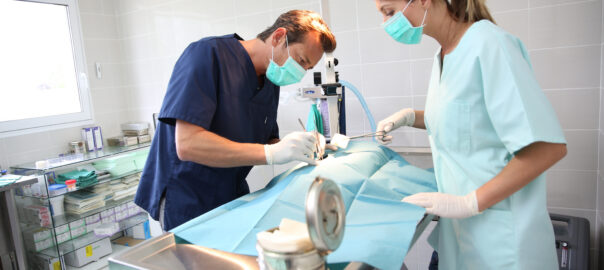
During the procedure itself, continuous monitoring is essential. A trained veterinary technician stays with your pet the entire time, watching multiple parameters:
- Heart rate and rhythm through electrocardiogram (ECG) monitoring
- Blood pressure to ensure adequate circulation
- Oxygen levels using pulse oximetry
- Carbon dioxide levels through capnography, which tells us about breathing effectiveness
- Body temperature, because maintaining normal temperature is crucial for safe recovery
- Respiratory rate and depth to ensure proper breathing
This monitoring isn’t just recording numbers—it’s actively watching for any changes that need immediate intervention. Modern monitoring equipment has alarms that alert us to concerning trends before they become emergencies.
We tailor the anesthetic drugs to each pet’s needs. Most commonly, we use inhalant anesthetics like isoflurane or sevoflurane, delivered through an endotracheal tube. These drugs are metabolized primarily through the lungs, which makes them very controllable and safe for pets with certain organ conditions. The beauty of inhalant anesthetics is that we can adjust the depth of anesthesia minute by minute based on what the monitoring tells us.
The Critical Recovery Period
Here’s something many pet parents don’t realize: the recovery period after anesthesia is just as important as the procedure itself. Research shows that between 47% and 60% of anesthesia-related complications in dogs and cats occur during the post-operative period, with most happening within the first three hours after the procedure ends.[4]
That’s why we maintain the same level of careful monitoring as your pet wakes up. We watch breathing patterns, keep them warm, manage any pain or nausea, and make sure they’re waking up smoothly before they go home. The vast majority of pets wake up a little groggy and are back to their normal selves within a few hours.
Where to Get Safe Anesthetic Care in Northern Nevada
Whether your pet needs a house-call assessment from me here in Sparks or a procedure at one of our excellent local facilities, you have good options. The community-focused, non-profit hospital, Options Veterinary Care, and the SPCA of Northern Nevada clinic both provide quality anesthetic care for pets. For specialized procedures or high-risk patients, the specialty and emergency hospitals in our area have board-certified anesthesiologists and the most advanced monitoring equipment available.
The Bottom Line
I won’t tell you not to worry—that’s asking too much of anyone who loves their pet. But I can tell you that the anesthesia your pet receives today is safer than it’s ever been. Comprehensive pre-anesthetic assessment, individualized protocols, continuous monitoring, and attentive recovery care all work together to minimize risk.
When I recommend anesthesia for a pet, it’s because I genuinely believe the benefits—addressing a painful condition, preventing serious disease, improving quality of life—outweigh the small, carefully managed risk.
If you have questions about anesthesia for your pet, I’m always happy to discuss them during a house call visit. Understanding the process often helps ease the worry.
Your pet’s safety is my priority, and modern veterinary anesthesia gives us the tools to protect them while providing the care they need.
ENDNOTES
[1] Brodbelt DC, Blissitt KJ, Hammond RA, Neath PJ, Young LE, Pfeiffer DU, et al. The risk of death: the confidential enquiry into perioperative small animal fatalities. Vet Anaesth Analg. 2008;35:365–373.
[2] Gruenheid M, Aarnes TK, McLoughlin MA, Simpson EM, Mathys DA, Mollenkopf DF, et al. Risk of anesthesia-related complications in brachycephalic dogs. J Am Vet Med Assoc. 2018;253(3):301-306.
[3] Brodbelt DC, Blissitt KJ, Hammond RA, Neath PJ, Young LE, Pfeiffer DU, et al. The risk of death: the confidential enquiry into perioperative small animal fatalities. Vet Anaesth Analg. 2008;35:365–373.
[4] Grubb T, Sager J, Gaynor JS, Montgomery E, Parker JA, Shafford H, et al. 2020 AAHA Anesthesia and Monitoring Guidelines for Dogs and Cats. J Am Anim Hosp Assoc. 2020;56(2):59-82.
[5] Dobbs P, Moittié S, Liptovszky M. Avian anaesthesia related mortality and the associated risk factors in a UK zoological collection. Vet Anaesth Analg. 2021;48(6):922-929.
About the Duffield Foundation Practice Incubation Grant
Dr. Vasquez-Perez is one of only two veterinarians in Nevada to receive a practice incubation grant from Petopia.org and The Dave & Cheryl Duffield Foundation. This grant supports veterinarians committed to delivering care where it’s most needed and enables Dr. Vasquez-Perez to serve families who might otherwise struggle to access veterinary care.
About The Dave & Cheryl Duffield Foundation: The Dave & Cheryl Duffield Foundation is a private charitable foundation based in Incline Village, Nevada. The Duffields are also the founders of Maddie’s Fund, a leading animal welfare foundation dedicated to revolutionizing the status and well-being of companion animals. While the Duffields are long-time benefactors of companion animal causes, the Foundation also allows them to focus their philanthropic efforts in other areas they are passionate about, including supporting military veterans and giving back to their local community.
About Petopia.org: Three out of four pets in vulnerable communities have never seen a vet, even though veterinarians believe that all pets deserve care. Petopia helps veterinarians expand their care to vulnerable communities as part of their mission to promote community health by supporting healthy connections between humans, animals, and the environment, and to reduce animal suffering by providing access to veterinary care. Individuals can sponsor a veterinary visit with a donation as low as $10 at petopia.org/make-a-donation.