
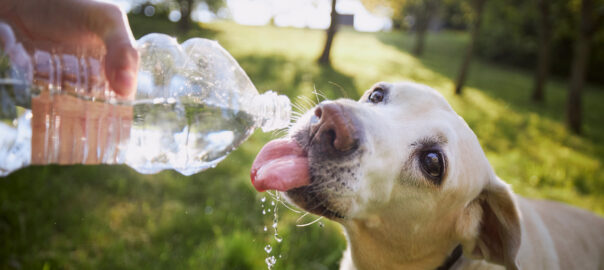
Summer means longer days, backyard barbecues, and more time outdoors with our dogs. But as temperatures climb, what feels like a perfect sunny day to us can be dangerous, even deadly, for our four-legged family members.
Your dog depends on you to keep them safe when the mercury rises. This article will help you understand how heat affects dogs differently than humans, learn the warning signs of heat stroke, and know how to prevent hot pavement burns. Awareness and planning can make the difference between a fun summer and a veterinary emergency.
(Cat parent? Cats face their own set of summer heat risks, and they’re easy to miss. Read our companion guide, Summer Cat Safety Guide, for what to watch for.)
Why Summer Heat Hits Dogs Harder Than You Think
Unlike us, dogs can’t cool off by sweating all over their bodies. They mainly rely on panting and the tiny bit of sweating they can do through their paw pads. Imagine trying to cool down wearing a fur coat while only being able to sweat through your hands and feet. That’s what your dog faces every hot day.
Some dogs face even bigger challenges with summer heat. If you have a flat-faced breed like a bulldog or pug, their pushed-in faces make it much harder for them to breathe and cool down effectively. Brachycephalic breeds can go from seeming fine to heat stroke in just minutes. Older dogs, overweight dogs, and those with heart problems are also at higher risk for heat-related emergencies.
“Here in North Carolina, I see so many bulldogs and pugs struggling in our humid summers. What many owners don’t realize is that these flat-faced breeds can go from seeming fine to heat stroke in just minutes. I always tell clients, if your brachycephalic dog is panting hard, it’s time to head inside immediately.” — Jennifer Hawthorne, DVM, Matthews, NC
Dog Heat Stroke Symptoms: Identifying the Warning Signs
So much of caring well for a pet is simply paying close attention. The ones we love most, whether they’re very young, getting older, or just can’t tell us what they need, depend on us to notice the small changes: a little more panting, a little less pep, a reluctance that wasn’t there yesterday. Summer asks us to watch a bit more closely and to trust what we see. When something feels off, it usually is, and it’s always worth acting on.
Heat stroke happens when your dog’s body temperature shoots up dangerously high, usually above 104°F, and their natural cooling system just can’t keep up. It can happen faster than you might think, especially on humid days when panting becomes less effective. Knowing the difference between heat exhaustion and heat stroke can save your dog’s life.
Here’s what to watch for:
Early warning signs your dog is getting too hot:
- Heavy panting that doesn’t stop, even when resting
- Excessive drooling
- Looking tired or reluctant to keep playing or walking
- Seeking out cool spots like tile floors or shade
When things get serious:
- Bright red gums and tongue
- Racing heartbeat
- Seeming confused or wobbly
- Vomiting
Emergency territory. Call your vet immediately:
- Collapse or inability to stand
- Seizures
- Loss of consciousness
- Gums turning blue or gray
- Bloody vomit or diarrhea
“As a house call veterinarian, I love seeing families get outside with their dogs. We have wonderful places to explore, like Mont Belvieu City Park and Jenkins Park in Baytown, but our Texas summers can become dangerously hot very quickly. Before heading out, plan for the heat—go early in the morning or later in the evening, bring plenty of fresh water for both you and your dog, and pay close attention to how your pet is doing. If your dog starts drooling excessively, stumbling, slowing down, or falling behind when they’re usually leading the way, those are early signs they may be overheating. Stop, get them into the shade or air conditioning, and help them cool down before heat exhaustion becomes an emergency.” —Wendy Crouse, DVM, Baytown, Texas
It May Be Hotter Inside Your Dog Than You Think
Because so much canine heat illness comes from exertion rather than air temperature alone, a dog can overheat on a day that feels only moderately warm to you, especially during hard exercise. This is why how and when you walk matters so much.
The research bears this out. In a study of more than 900,000 UK dogs, the Royal Veterinary College found that about 74% of heat-related illness cases were triggered by exercise, not hot cars or hot weather. And strikingly, the typical case occurred on a day averaging only around 62°F. A fit dog running hard, or a flat-faced breed simply working to breathe, can overheat when it’s cool outside, because the heat source is muscle, not sunshine.
Hot Pavement Burns Dog Paws: The Hidden Summer Danger
Here’s something many dog owners don’t realize: when it’s 85°F outside, asphalt can reach 135°F. At 90°F, pavement temperatures can rise to 150°F or higher. That really is enough heat to cook an egg. It can burn your dog’s paw pads in under a minute.
The Five-Second Hand Test
Before heading out for a walk, try this simple test: place the back of your hand on the pavement and count to five. If it’s too hot for your hand, it’s too hot for your dog’s paws. This quick check can prevent painful hot pavement burns that might not become obvious until hours later.
Smart Dog Walking in Hot Weather
Time it right: Early morning and late evening walks are your best bet when temperatures are cooler. Avoid midday adventures when the sun is strongest, and surfaces are hottest.
Choose your path: Grass, dirt trails, and shaded walkways are much cooler than concrete and asphalt. Even shaded pavement can retain dangerous heat, so natural surfaces are always safer for dogs’ paws in summer.
Bring water for the road: Always carry fresh water for your dog, even on short walks. Those collapsible silicone dog water bowls that clip onto your leash or tuck into a backpack pocket are a summer game-changer. Many come with carabiners or straps that make them easy to carry, and they fold flat when not in use. Some even have a built-in water bottle attached. Your dog will appreciate frequent water breaks, especially on longer outings.
Watch for warning signs: If your dog starts lifting their paws, trying to walk on grass instead of the path, or seems reluctant to keep walking, their feet might be getting burned.
When Heat Emergency Strikes: How to Cool Down an Overheated Dog
If you suspect your dog is overheating, every second counts. Here’s your action plan for emergency cooling:
Get them cool immediately: Move your dog to air conditioning or at least shade. Start cooling them down with cool (not ice-cold) water on their paw pads, belly, and inner thighs. Point a fan at them if you have one.
Offer water: If your dog is conscious and able to drink, offer small amounts of cool water. Don’t force it if they’re not interested or able to drink on their own.
When to head to the vet: Even if your dog seems to be recovering, heat stroke can cause internal damage that isn’t immediately visible. Call your veterinarian or emergency clinic right away. Heat stroke requires professional medical evaluation even when symptoms seem to improve.
What NOT to do: Don’t use ice or ice-cold water. It can actually make things worse by constricting blood vessels. Don’t leave your dog unattended while they’re cooling down.
Creating Your Summer Dog Safety Plan
Make your yard dog-friendly: Ensure there are shaded areas available throughout the day. Consider adding umbrellas, tarps, or other shade structures. Kiddie pools can be a great way to cool off for dogs who enjoy water.
Adjust your routine: Shift your schedule so walks and outdoor playtime are during cooler parts of the day. On extremely hot days, focus on indoor activities to prevent heat stroke.
Know your dog’s limits: Every dog is different. Some love to sunbathe, while others seek shade at the first sign of sun. Pay attention to your dog’s preferences and respect their comfort zones.
Never leave your dog in a parked car: According to the American Veterinary Medical Association, a vehicle’s interior can climb almost 20°F in just 10 minutes and nearly 30°F in 20. Within an hour, it can be more than 40°F hotter than outside. On a 70°F day, that means over 110°F inside your car. Cracking the windows makes no meaningful difference. If you can’t bring your dog inside with you, leave them safely at home.
Stay prepared: Keep your vet’s phone number handy, know the location of the nearest emergency clinic, and consider keeping a pet thermometer in your first-aid kit to monitor body temperature.
Senior Dogs and Puppies Need Extra Care
Active dogs: Dogs are often willing to push through discomfort to please you. Watch for signs they’re overheating even if they seem eager to keep playing or walking.
Senior dogs: Older dogs may not show obvious signs of distress until they’re in serious trouble. Be extra cautious and practice careful senior dog summer care.
Puppies: Very young dogs can’t regulate their body temperature as effectively as adults, so they’re especially vulnerable to heat.
“Senior dogs and puppies are my biggest worry during the Triangle’s hot, humid summers. Older pets may have underlying health issues that make temperature regulation harder, while puppies just don’t have fully developed cooling systems yet. I tell families with very young or very old pets to be extra conservative – when you think it might be too hot, it probably is.” — Kristan Riley, DVM, Heal House Call Veterinarian, Vass, NC
Keep Your Dog Safe All Summer Long
Summer should be a fun time for you and your dog, not a season of worry. By knowing the risks, recognizing dog heat stroke symptoms, preventing hot pavement burns, and taking simple precautions, you can help your dog stay safe and comfortable all season long.
When in doubt, err on the side of caution. Your dog can’t tell you when they’re getting overheated, so it’s up to you, the responsible pet parent, to spot subtle signs. Extra care and attention during the hottest months can prevent serious injuries and keep tails wagging through Labor Day and beyond (and prevent a trip to the ER).
“I always remind families that our dogs will do almost anything to stay by our side. If we head out on a long summer walk, they’ll try to keep up, even on much smaller legs and wearing a coat they can’t take off. It’s up to us to be the ones who say ‘that’s far enough for today.’ Loving them well sometimes means slowing down for them, because they won’t slow down for themselves.” — Sharon Daley, DVM, Heal House Call Veterinarian, Wake Forest, NC
Sources: Heat-related illness statistics are drawn from the Royal Veterinary College’s VetCompass research programme, based on the primary-care veterinary records of more than 900,000 UK dogs (Hall, Carter & O’Neill, 2020). Vehicle temperature data is from the American Veterinary Medical Association.
Author Bio:
Betsy Banks Saul is co-founder of Heal House Call Veterinarian and founder of Petfinder. She’s passionate about helping pet parents keep their animal family members safe and healthy through education and accessible, at-home veterinary care.